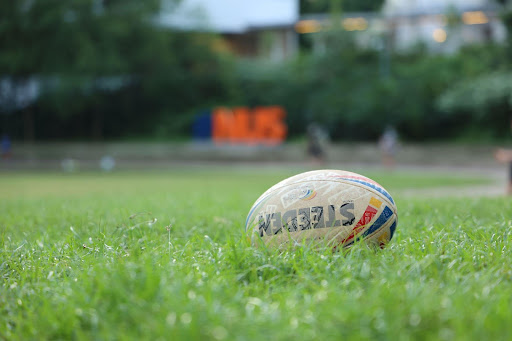
Rugby League World Cup 2026 opens in Sydney on October 15 with defending champion Australia facing New Zealand at Allianz Stadium. The tournament then runs until November 15 across Australia, New Zealand and Papua New Guinea, with 26 teams playing 53 matches across the men’s, women’s and wheelchair competitions. The men’s field has dropped from 16 teams at the previous World Cup to 10, while the women’s and wheelchair tournaments each contain eight. Fewer teams do not mean fewer meaningful games: the new structure removes much of the margin for a slow start.
Ten Teams Leave Almost No Safe Match
The men’s format is unusual. Australia, New Zealand, Fiji and the Cook Islands form Group A and play one another, while England, Samoa and Lebanon in Group B play only the three teams in Group C: Tonga, Papua New Guinea and France. The top two from Group A reach the semifinals, while Groups B and C are merged into a six-team table from which only the top two advance. England therefore opens against Tonga at Perth’s HBF Park on October 17, knowing that one poor night consumes a third of its group-stage schedule.
Australia Gets No Time to Settle
Australia’s opener is about as awkward as it could be. New Zealand comes to Sydney with a recent trophy behind it after beating Samoa 36-14 in the 2025 Pacific Cup final, so there is little room for the Kangaroos to spend the first week finding combinations. That problem became sharper on September 27, when Nathan Cleary suffered a compound fracture of his left ankle in the NRL preliminary final and was ruled out of the tournament before Kevin Walters named his 23-man squad. Australia can replace talent more easily than most countries, but Cleary’s absence is not just about finding another halfback: it removes a familiar kicking game, a steady organizer and one of the players most likely to control the pace when the opening match becomes tight.
NRL Viewers Will Recognize the Rulebook
International Rugby League approved the 2026 NRL and NRLW rules and interpretations for the World Cup in April. That brings the Video Review Bunker, Captain’s Challenge and shot clocks for scrums, goal-line dropouts and goal kicks into the tournament, while HIA, judiciary and match-review procedures follow the host competitions. Every men’s and women’s match must produce a winner, with Golden Point used when scores are level after regulation. That matters particularly in the combined Group B/C standings, where England, Samoa, Lebanon, Tonga, PNG and France cannot bank a draw and move on.
Halftime Changes the Type of Probability
Rugby league can be analyzed through tackle counts, territory, kicking position, line breaks and interchange patterns. During the interval, an adult opening Keno Live (Arabic: كينو مباشر) moves from a contest shaped by player decisions to a casino game based on random number draws. Live keno formats can differ in draw frequency, number selection, paytable, and house edge, while numbers from an earlier draw do not make a future number more likely to appear. Keeping a defined entertainment bankroll separates that random process from the tactical information available during the match itself.
The Women’s Draw Has Its Own Pressure Points
The women’s World Cup keeps the more familiar two-groups-of-four structure. Australia, England, Samoa and Wales occupy Group A, while New Zealand, Papua New Guinea, France and Fiji make up Group B; the leading two teams in each group advance to the semifinals. Australia begins its title defense against Samoa at CommBank Stadium on October 16, and women’s matches will run for 70 minutes under the adopted NRLW rules. The semifinals then share double-header programs with the men in Newcastle on November 7 and Sydney on November 8.
Wollongong Hosts All Three Formats in One Day
October 30 gives the tournament one of its most distinctive programs. England’s men face Papua New Guinea at WIN Stadium, and England’s women meet Samoa at the same venue, while the wheelchair competition begins next door at WIN Entertainment Centre with England-Wales and Ireland-USA. Organizers say it will be the first time men’s, women’s and wheelchair internationals have been staged in the same sporting precinct on the same day. The entire eight-team wheelchair World Cup remains in Wollongong, with its final scheduled for November 13.
Brisbane Gets the Last Word
The men’s and women’s semifinalists move through Newcastle and Sydney before both finals reach Suncorp Stadium on November 15. Only four semifinal places exist in a 10-team men’s field, and the crossover system means England, Samoa, Tonga, PNG and the other Group B/C sides cannot repair a poor campaign by beating weaker teams inside their own pool. Every point counts. The smaller field has removed six teams from the previous men’s format, but it has also compressed the competition into a month in which most matches can directly affect who is still playing in the second weekend of November.